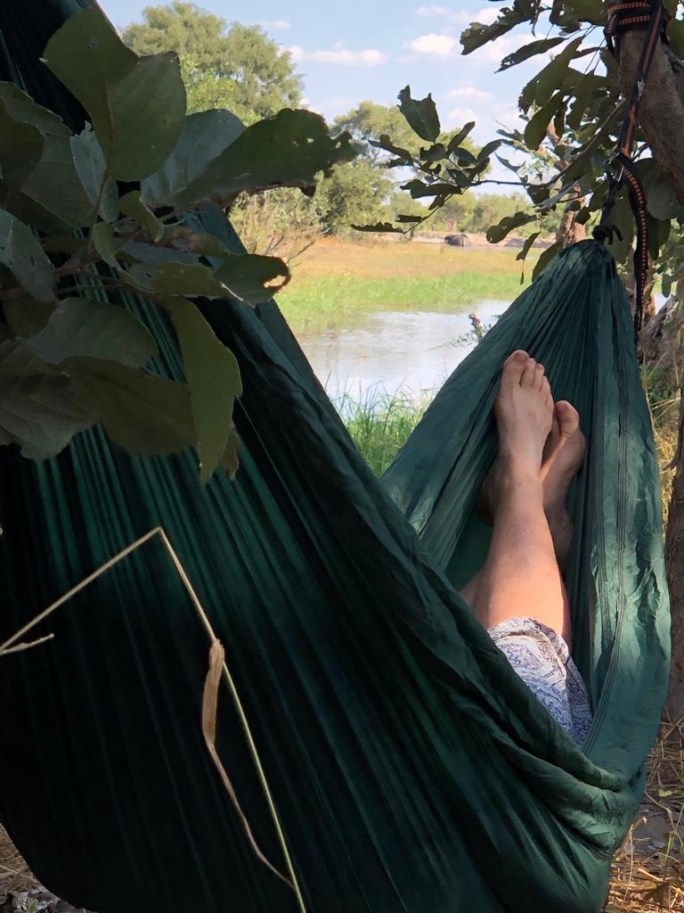
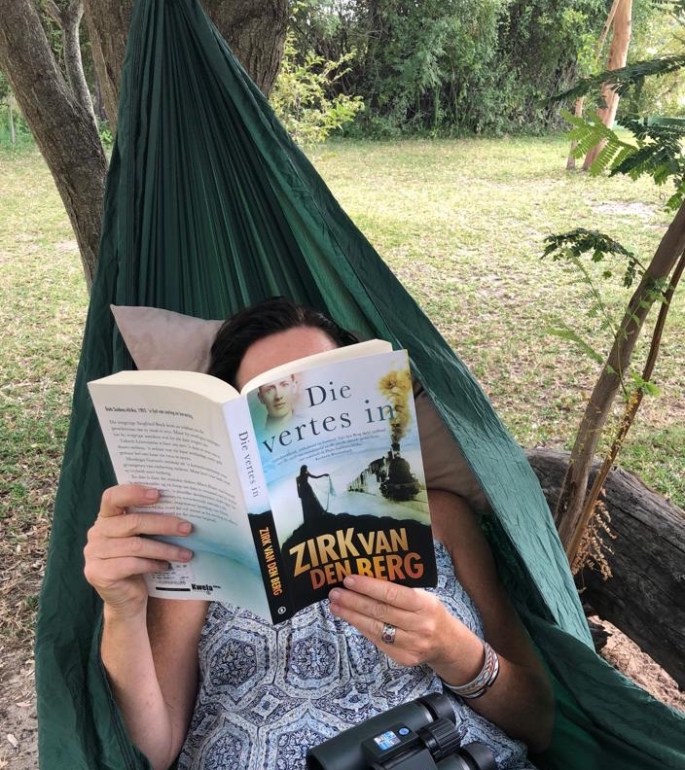
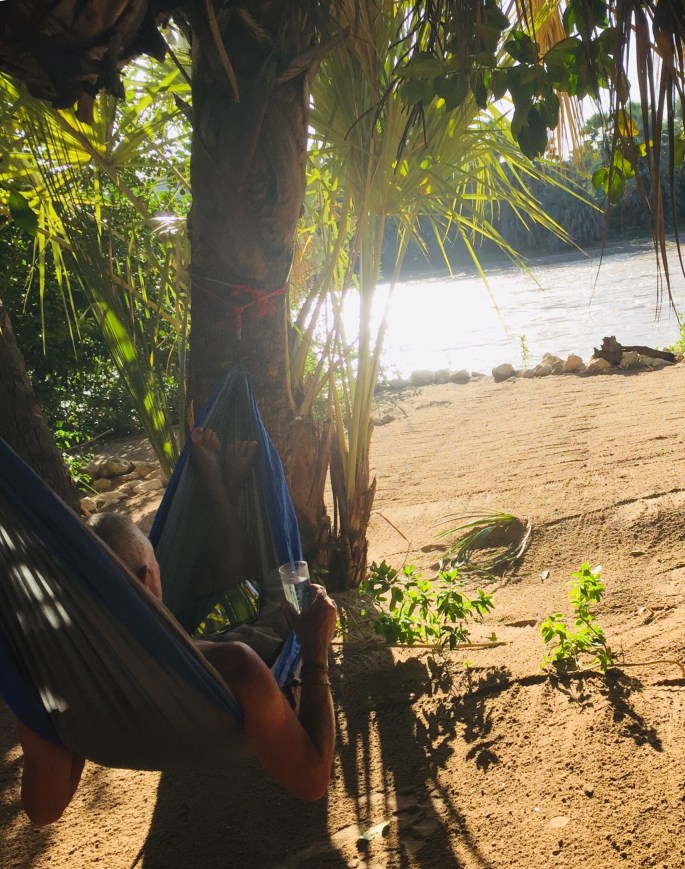
After Moremi, Dijara Community Camp was our next stop. There were no other campers, so we had the luxury of choosing our site. The one on the banks of the river with trees spaced perfectly for a hammock looked just right. With binoculars and book in hand, I set off for a relaxing afternoon of reading and birdwatching, suspended between two trees at the edge of the river.
As I lay gazing lazily into the middle distance, I noticed little archipelagos of grass clumps drifting downstream. Little did I realise that these were harbingers of an imminent visitor…I glanced up from my book and saw two little round ears in the river a few metres away. I knew that they belied the enormous hulk that loomed beneath the surface, and I was out of that hammock in one movement. Not a chance was I getting caught between those chompers.
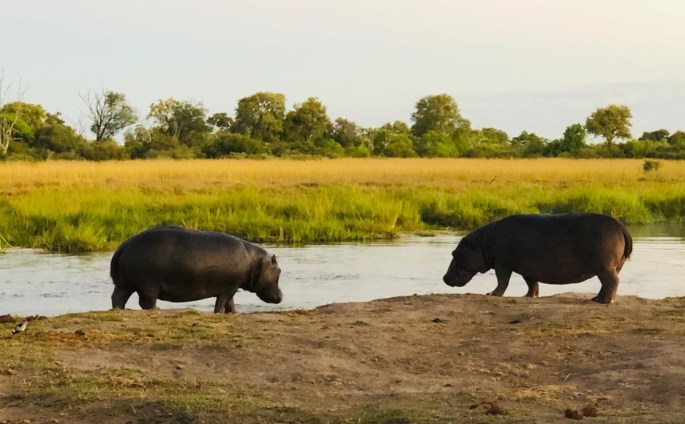
A short while later, as I gathered my wits in the relative safety of our caravan, Mr Grey lumbered across for a howdy-do. He broke a few branches around our site and then had a dust bath in the adjoining campsite. Goeie genugtig! We sure were communing with nature.
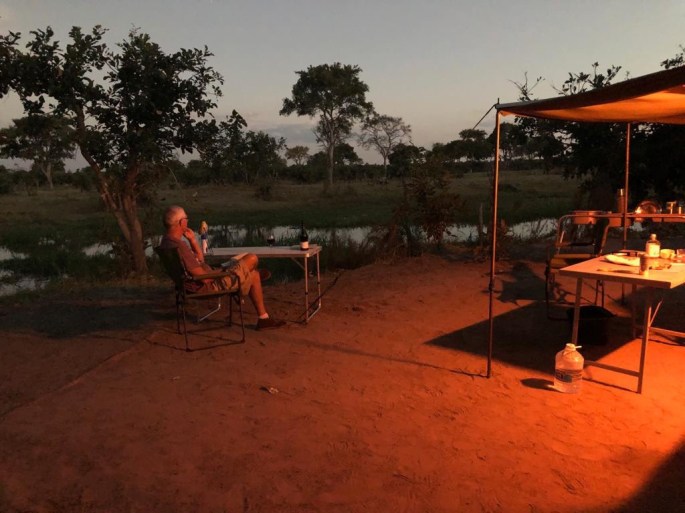
Dijara Camp
Setting: 10/10- especially as we were the only campers there
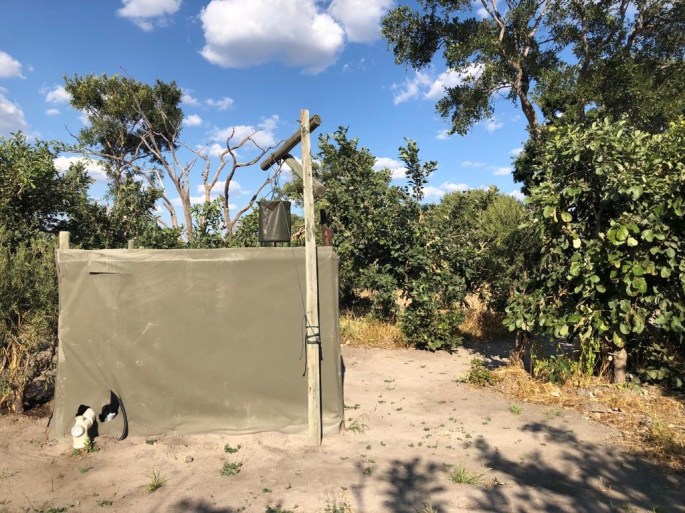
Amenities: basic- cold bucket showers, but they did the job well enough.
Buckle up and hold on to your hat – we were in for one hell of a bumpy ride. These roads made the Namibian roads feel like the Autobahn by comparison.
Bridge over the River Khwai: our entry into Moremi
We were up before dawn to make the most of our short stay in Moremi. At the first glimmer of light, we set out. The fronds of the grass looked golden in the early morning light, and the vegetation was lush and fresh in the morning dew. I opened my window and breathed in the wild smell of the bush. Compared to South African game parks, Moremi is quite undeveloped. On the one hand, the lack of maps and road signs make navigation frustrating; on the other, though, it has something pure and unsullied by human intervention about it.
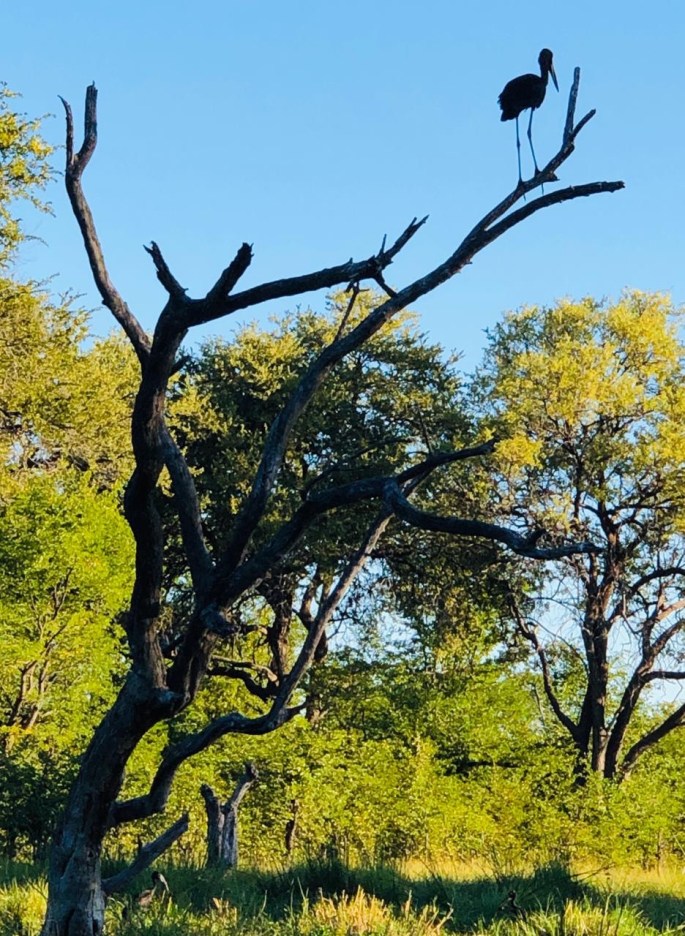
The first clue that we were going to see something special was a little jackal that trotted past, licking his chops and looking quite pleased with life. Above us, vultures were wheeling. And then, a few metres ahead of us, we a saw a yellow mane and what looked like a buffalo’s horn: lions were feeding. Never mind the vultures wheeling, I was reeling…from the schtunk. Pheeew! It was rank. As we sipped our morning coffee (with the window closed), we watched the sun rise on a magnificent bush scenario. In the distance was the aggrieved huu -hu-hu-hu of a hippo and the cries of fish eagles; right in front of us, lions tore away at a buffalo carcass while the vultures, aging and stooped, their bald pates darkened, patiently waited their turn.
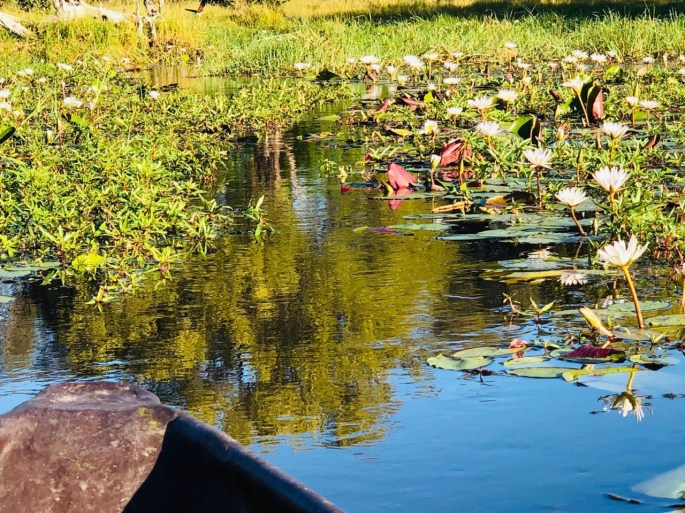
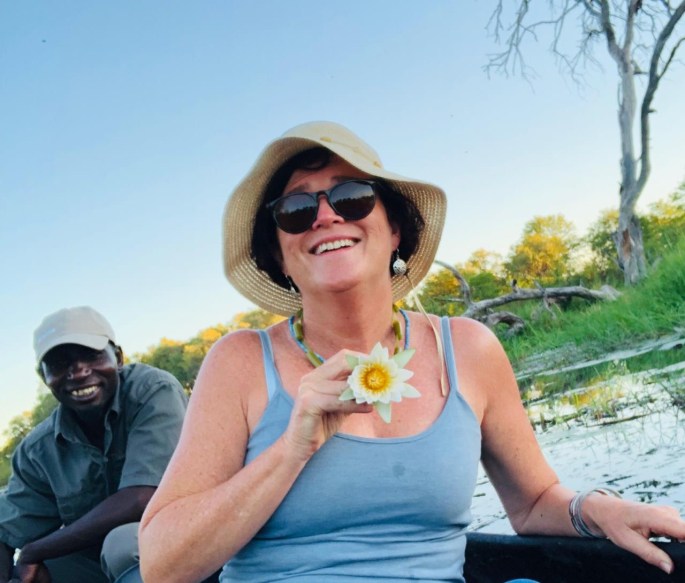
A Mokoro trip at sunset was the perfect way to end the day. The silent, gliding motion of the mokoro through the water lilies, with the cool evening air on our skins, was a panacea for our jolt-and-bump-weary bodies.
Ngoma border post was a quiet and easy entry into Botswana. This was the beginning of our 2000km loop through Botswana and then back through Namibia to Nambwa again. Why, for heaven’s sake , would we do this? The short answer is- to take up the opportunity of what promises to be a unique experience: joining San master trackers in the Nyae Nyae Conservancy in the Otjozondjupa region, Namibia. This has been made possible by an invitation from Clive Thompson, Anton’s ex-colleague, with whom we did a memorable guided walk in Pafuri two years ago.
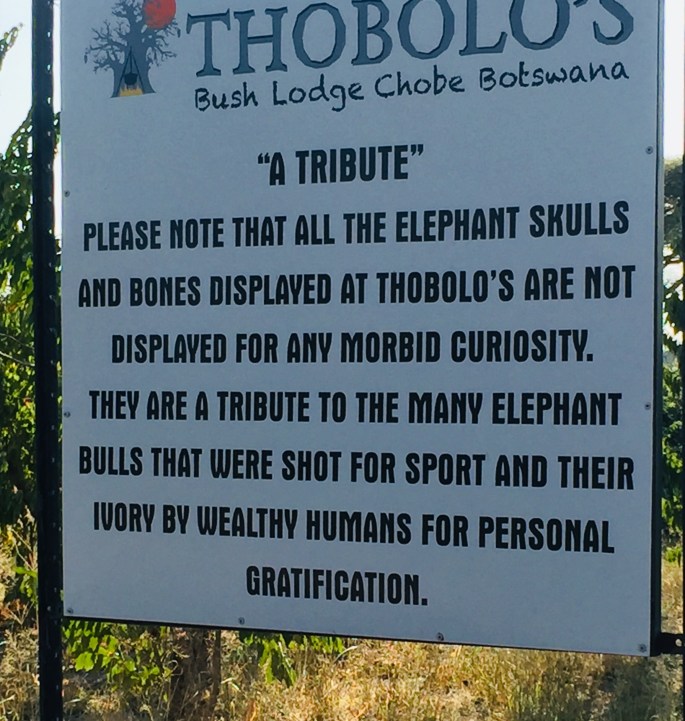
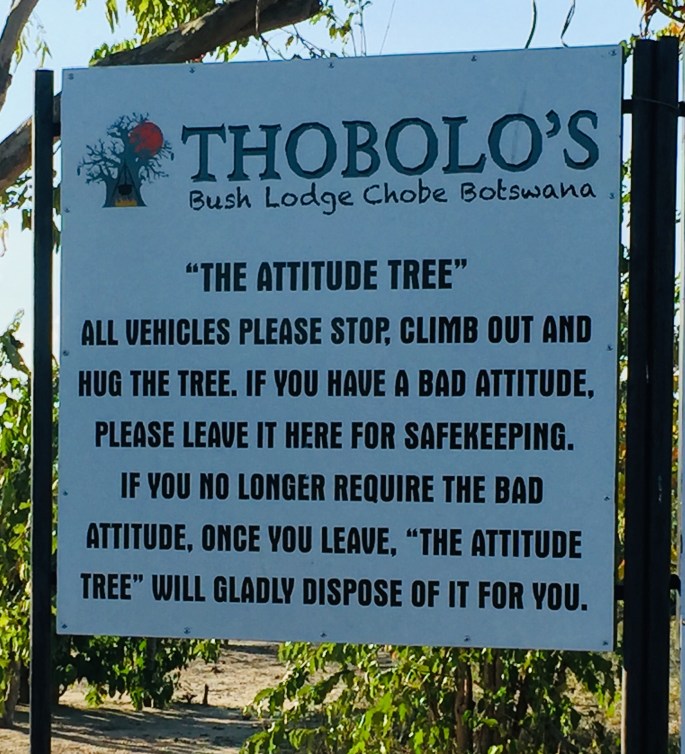
After an extremely sandy and hair-raising drive, with the trauma of the Nambwa extrication fresh in my memory, we arrived with great relief at Thobolo’s Camp. This is an ecotourism destination, and I appreciated both their humour and what they stand for.
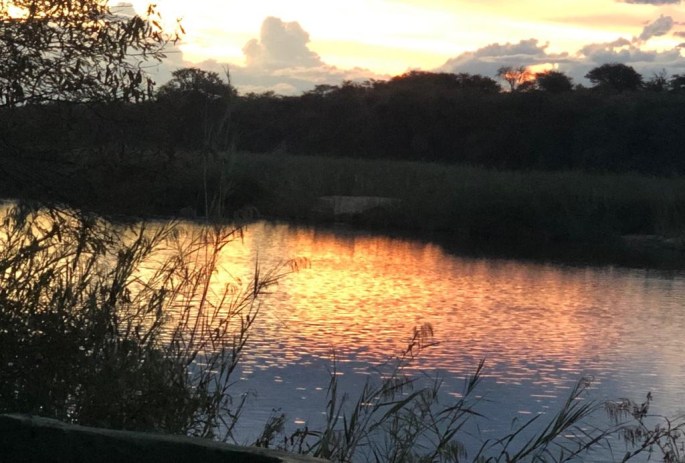
We celebrated Anton’s birthday on the 25th with a beautiful African sunset and a delicious steak at the lodge.
Thobolo’sCamp:
Setting: If you are fortunate enough to get campsite A10, the shade and proximity to the waterhole would warrant an 8/10 score. However, most of the sites don’t have much protection from the baking sun, nor do they have much of view. So, on average, the score we would give is 6/10.
Amenities: Use of the lodge’s facilities and shared ablutions : 6.5/10.
Drawback: Homo Sapiens: our stay coincided with the Namibian school holidays. Enough said.
Travel tips:
If you cross into Botswana via Ngoma, make sure that you have:
1.Pula – there is nowhere either to exchange or withdraw money other than Kasane (way off-route) or Maun.
2.Petrol – there are no fuel stations either. This could limit your game viewing in Moremi significantly.
Thankfully, we had fuel reserves in jerry cans
There are no shops except for the odd spaza shop, so stock up beforehand. No red meat may be taken over the border, however. We also had to relinquish fresh fruit and vegetables.
We had been so looking forward to camping on the banks of the Kwando River at Nambwa camp. Stew and Gill’s time there had sounded magical. If only the officials at Bwabwata National Park had warned us about the roads…
Very much like Robert Frost’s dilemma (with a few African adaptations):
Two roads diverged into a riverbed
And sorry we could not travel both,
And be one traveller, long we stood
And looked down one as far as we could
To where it bent along the river;
Then took the other, just as fair…
… which turned out to be a foolhardy decision.
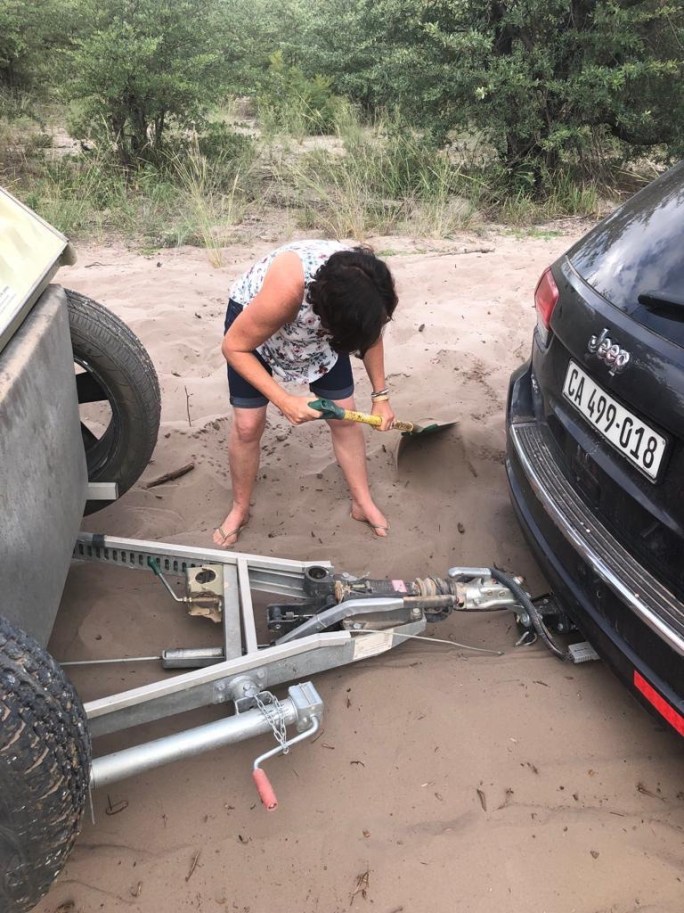
Now this was a road worth approaching with caution and reservation. As we progressed further along the riverbed, the sand got deeper, the swerves more frantic and the chances of getting stuck an ever-growing reality. And then there was a dull thud as the undercarriage came to rest snugly on the middelmannetjie (although the diminutive is inappropriate in this instance). We looked at each other with big eyes. Wat nou?
We shifted into self-help gear: Anton got the Maxtrax; I wielded the spade.
Anton engaged low range and put foot. No go…just an alarming grinding sound and a shower of sand as the wheels whirred us ever deeper into the mire.
Plan B: phone a friend. This was starting to feel familiar. However, the lack of phone signal made that idea redundant. Thank heavens for our nifty little WiFi gadget that we had bought in Swakopmund. An emergency WhatsApp call was made to Marion: the old ballies were stuck again. She phoned head office in Windhoek who organised a rescue mission from the camp. It would take a while, we were told.
We decided to make the best of our situation and poured a G&T.
About an hour later, we heard the rumble of an engine. Hooray! Help was at hand.
Furious digging ensued…
…and the snatch strap was attached to the Land Cruiser…
…and we were in business. Maybe we’d see the sunset from our camp after all.
Except…the rescue vehicle also go stuck.
And the clouds were gathering.
May Day, May Day – two vehicles down in the riverbed. The feedback was basically: suck it up. The other vehicles were all out on game drives. So, there we sat. And sat. And sat. The sun set and night set in.
Escaping our grounded reality in the pages of a book
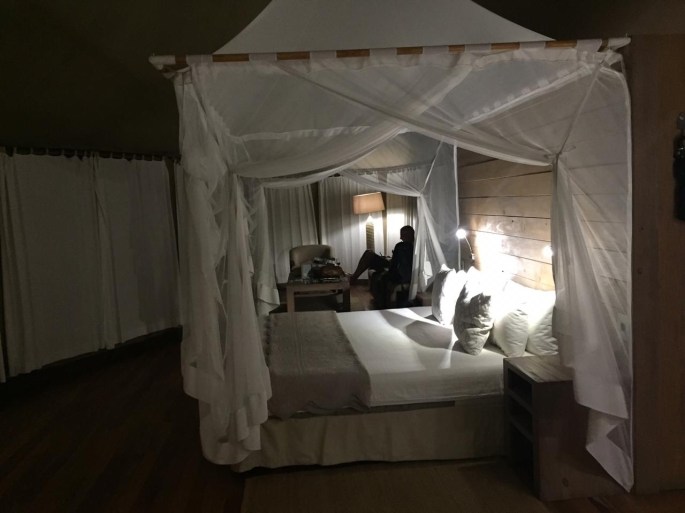
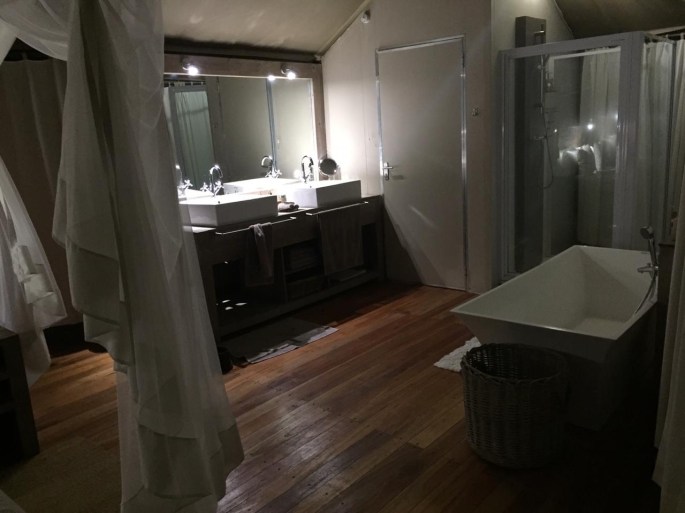
Eventually, at 7.30, more help arrived. A decision was made to pursue the rescue operation in the light of day, so we were plucked out of our sandy hollow and deposited into tented nirvana:
That night, as I snuggled into the Egyptian cotton linen, Anton at my side and the sound of the scops owl my lullaby, I counted my many blessings.
We woke to a magnificent view of the Kwando river and the surrounding plains. The second rescue attempt was successful, and we were soon on our way. This time we took the road more travelled, and that made all the difference.
We are now at Samitu Camp, idyllically situated on the banks of the Kavango River. My hammock is slung in the cool shade of a huilboom (African wattle). There is a bird party happening in the tree canopy which spans the campsite. The grey loeries have maintained their post the entire day, looking down on us, heads cocked with suspicion. The swamp boubous’ duet is interrupted by the jabbering of a garrulous gang of reed warblers and the high-pitched pieew of an African grey hornbill. In the distance, I can hear the squeals of Angolan children playing in the pools of the Kavango river, and the occasional bleating of goats. I could not feel more at peace.
An apt and beautifully written book, set in German South West Africa in 1905 ‘in ‘n tyd van oorlog en beroering’.
Attempting to identify the late avian visitors in the reeds
Samsitu Camp
Setting: 9/10
Facilities: 7/10
Highlights: sunsets, birds, having the camp to ourselves
Drawback: Day trippers…ay, there’s the rub. Loud partying and music at the adjacent bar was unpleasant for a couple of hours on our first evening. The second day and night were blissfully quiet.
The threat of a deluge turned out to be all sound and fury: there was a light sprinkling of rain – just enough to make that earthy smell of rain on dry earth. As for the Kunene River road…all that angst turned out to be much ado about nothing. Apart from a few rocky inclines and sandy river crossings, it was pretty much a standard 4×4 road – even pulling a caravan. Perhaps we were lucky, or maybe the skills of the driver played a role. 🙂 I would say that our passage was slowed more by livestock crossing than by river crossings
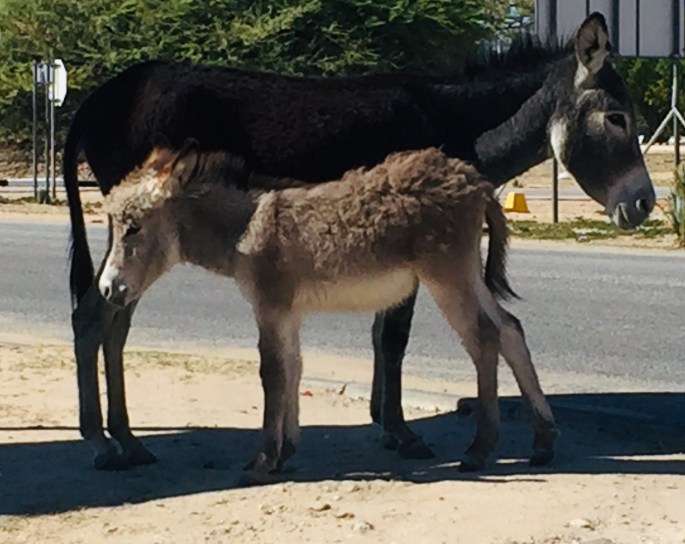
We saw dozens and dozens of donkeys en route, of which only two were being used as the proverbial beasts of burden. Life looks good for donkeys here.
It took us just under three hours to reach Kunene River Lodge where we camped for the night. And just when we thought our water consumption was no longer an issue, who should arrive to check on us…
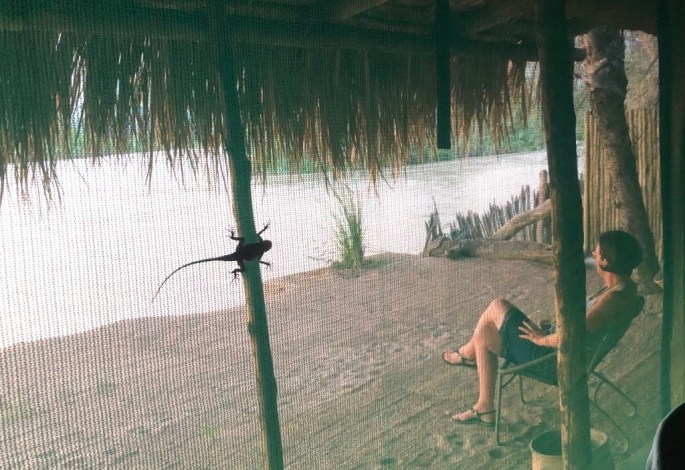
…a water monitor. 🙂
Kunene River Lodge
Setting: 8/10
Facilities: 7/10
Drawback: The sites are close together so it can feel a bit crowded- especially on the Easter weekend.
There are very few camps between Kunene River Lodge and Rundu, so we decided to push through to Rundu. It was a long 10 hour haul, mostly along the C43 and 45, so not particularly scenic. The names of some of the shebeens provided some entertainment, though:
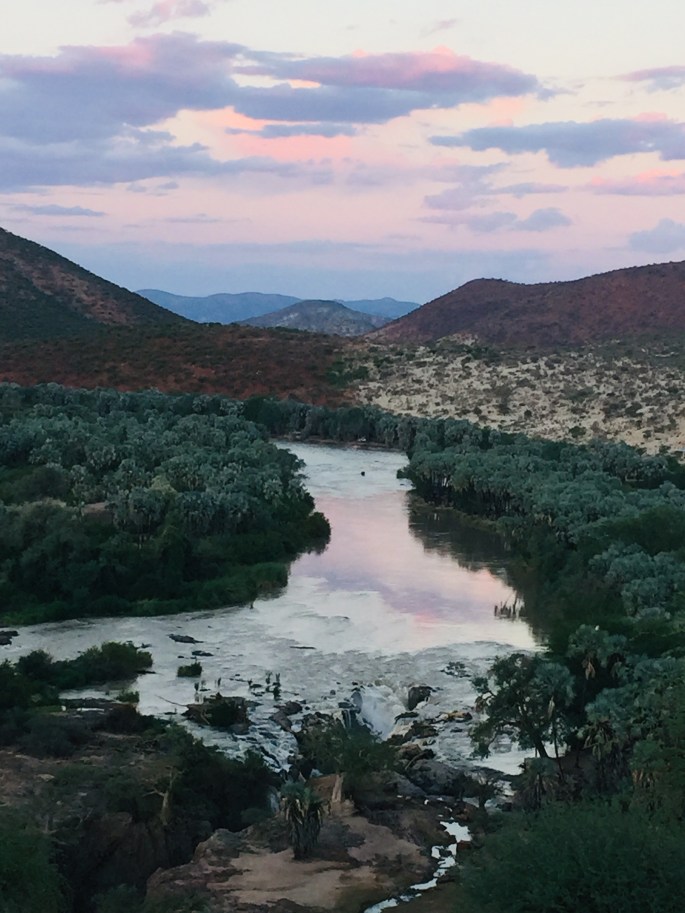
Just when I thought Namibia could not get any more exquisite, we arrived at Epupa Falls.
Situated on the Kunene River, Epupa camp shelters amongst the masses of palm and fig trees which line its banks. We are lucky enough to be the guests of friends and owners of Epupa Camp, Wouter and Marlien Van Zyl.
Cheers! View across the Kunene and into Angola
Marlien en Wouter -baie dankie vir jul gasvryheid! Dit is die absolute hoogtepunt van ‘n trip vol hoogtepunte tot dusver!
The heat persists! We use the butterometer to gauge the temperature. On Wednesday night at 7.45pm, it took 5 minutes for the butter to change from firm, cool curls of butter to a little yellow puddle. Last night, it was a little cooler: the butter still had some form by the end of our meal.
and cooling off in the river is clearly not an option
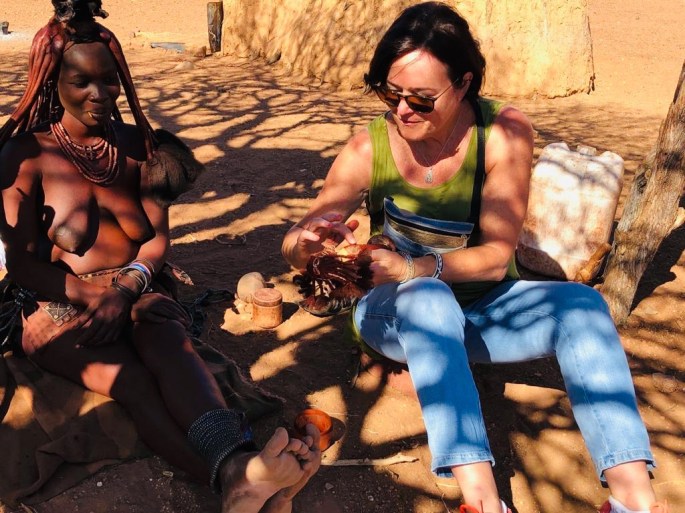
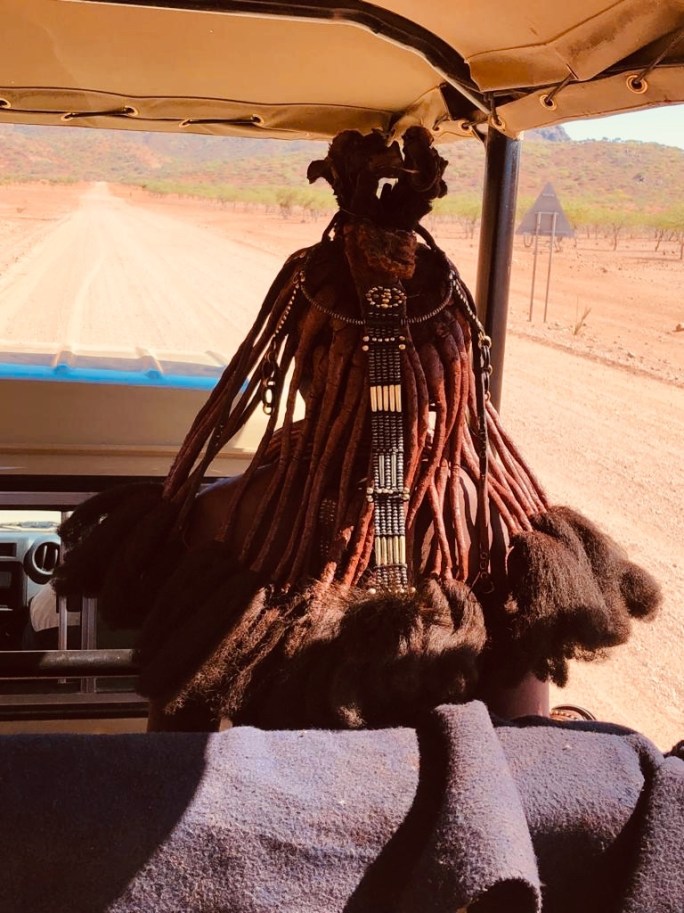
We visited nearby Himba villages yesterday which was a fascinating experience.
I tried my hand at painting with ochre. I also smoothed some on my skin. It looked very much like some of my unfortunate teenage experiments with fake tan.
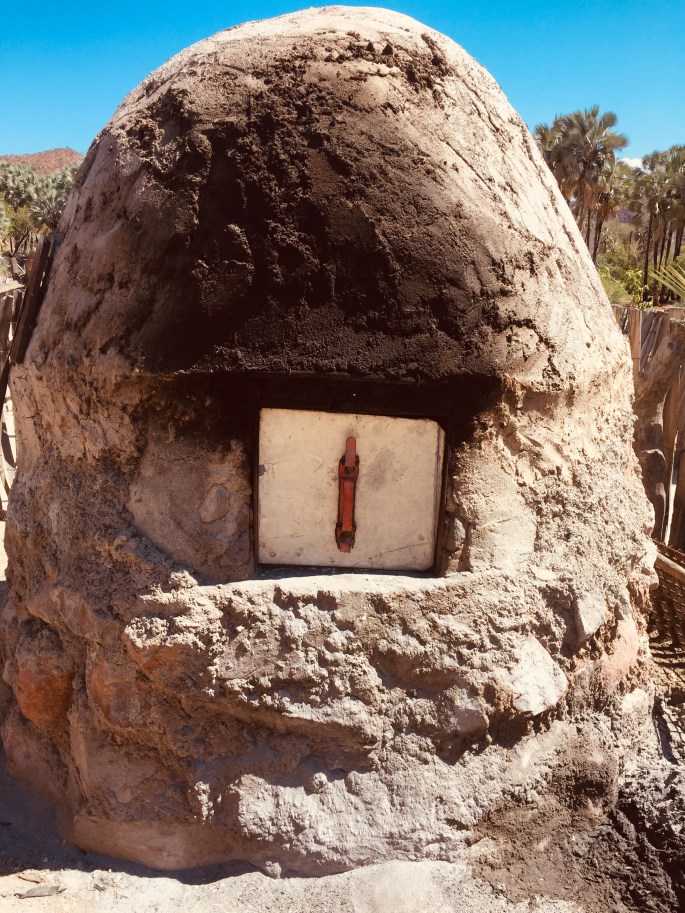
Tradition meets modernity
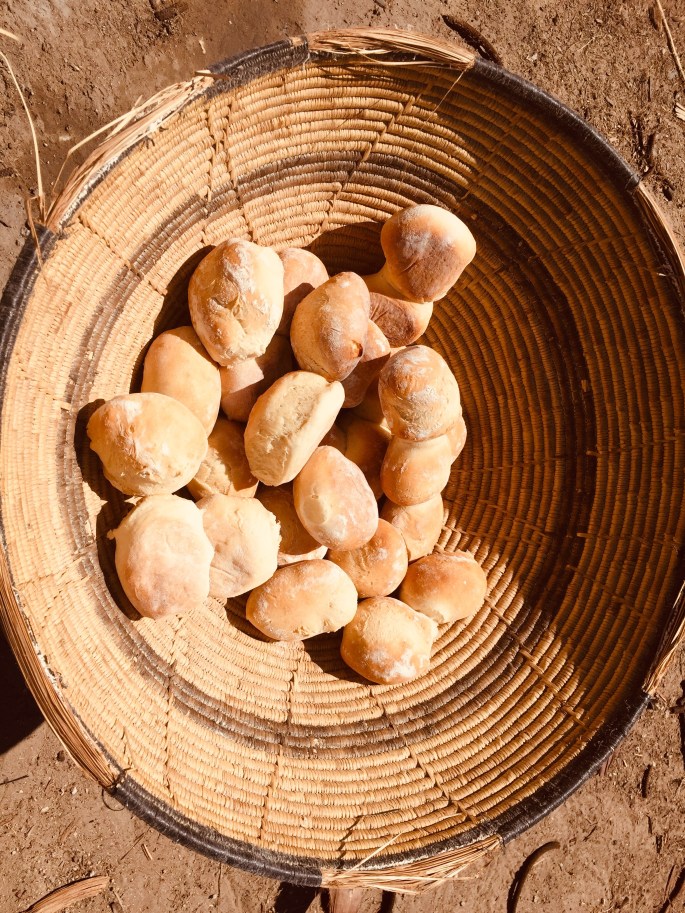
Anyone for freshly baked, crispy rolls?
Scrumptious
As I type, I can hear rumbles of thunder as dark clouds gather to the east. Anton is out cycling – best he makes haste! Rain will bring welcome relief from the heat and dust. Maybe we will have a cooler night’s sleep tonight.
Watching the storm roll in
Tomorrow we leave for Kunene River Lodge. We have heard varying reports about the condition of the scenic but more challenging 4×4 road along the Kunene, and whether it’s advisable to attempt it pulling a caravan. And what about the rain? Will it wash the road away?
There seems to be a direct correlation between distance from the ocean and air temperature. Our next stopover was at Khowarib Lodge, some 40km south of Sesfontein, and man, was it hot. We pulled into our campsite, set up camp in super-quick time and whipped on our cozzies. We had to cool down – fast!
The pool area was grassed and surrounded by acacia trees teeming with bird life. Reading, blogging, napping and watching the birds, we spent all afternoon at this heavenly oasis.
White- browed sparrow-weaver
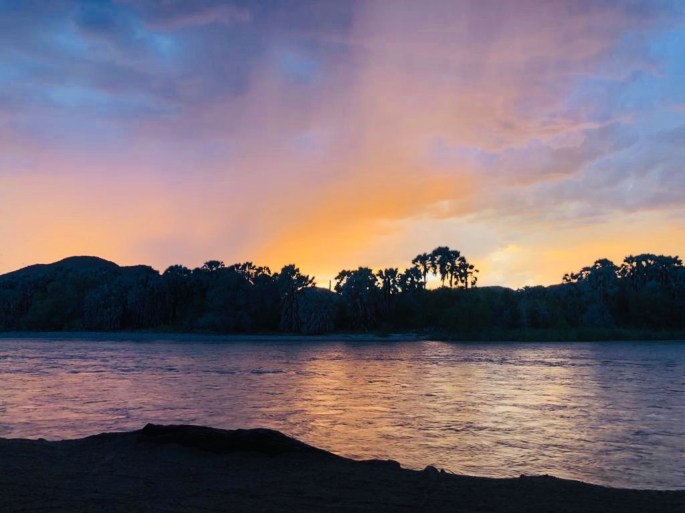
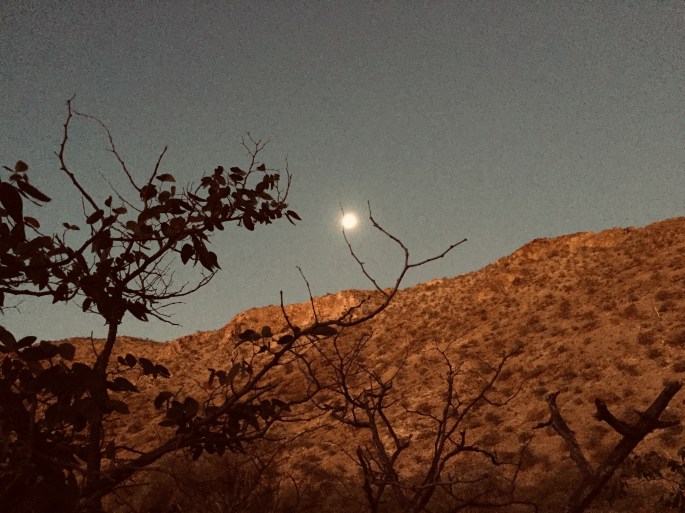
As the sun dipped westward, we made our way back to camp and watched the moon rise over the Hoanib River.
Travel Info:
Palmwag Lodge to Khowarib Lodge:
Distance: approximately 70km
Time: 1 hour
Khowarib Lodge Campsite:
Facilities and comfort: 6.5/10 (Broken toilet, electricity stopped working at our site- but beautiful pool!)
Ambience: 8/10 (if you get a riverside site) otherwise 6.5/10.
The road from Swakopmund to Uis was gloriously free of corrugations and ruts. Relatively speaking, it was like being in a hovercraft. We watched the landscape change as we drove deeper into Kaokoland: instead of the red sand dunes of the Kalahari and Namib-Naukluft, rocky koppies dotted the landscape. Volcanic activity aeons ago makes the region rich in gemstones, and hawkers try to eke out an existence selling these to travellers passing through. The closure of the tin mines has left many people living on the bread line.
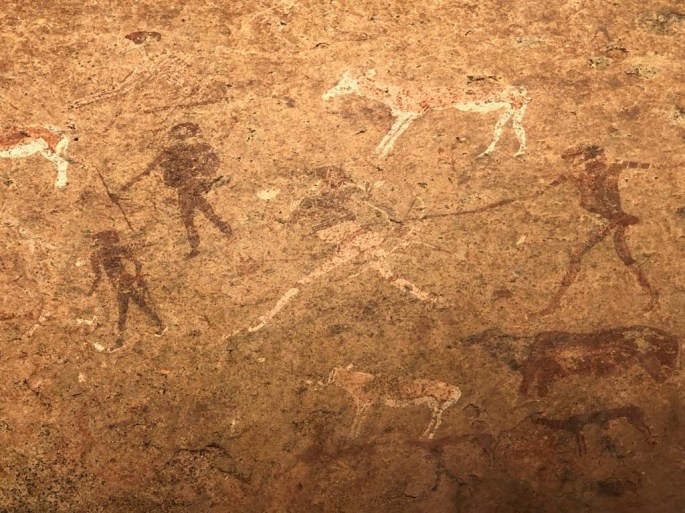
Kaokoland is also rich in ancient San rock art, so much so that Twyfelfontein was declared Namibia’s first World Heritage Site in recognition of the proliferation and quality of the paintings and petroglyphs found there.
We also went to see the famous ‘White Lady’ painting near Brandberg.
White Lady. Interestingly, neither female nor white as it turns out. This was actually a shaman, or medicine man. While pounding the sand in a dancing ritual, he raised clouds of dust which coated his body, turning it white.
It is compulsory to go on a guided tour – you cannot view the art on your own. The tour is worthwhile, though, and the tour guides are good. On one of the tours, we had the dubious fortune of having fellow visitor, Oscar the Omniscient, from the UK, with us. He was a font of information and generously and confidently shared his knowledge, often second guessing the guide (in a polite but slightly patronising way) saying things like, “Well, my understanding is that…” and “Well, actually, it’s…”
He made me think of one of my favourite poemsD.H Lawrence poems, The English are So Nice.
The English are so nice
so awfully nice
they are the nicest people in the world.
And what’s more, they’re very nice about being nice
about your being nice as well!
If you’re not nice they soon make you feel it.
Americans and French and Germans and so on
they’re all very well
but they’re not really nice, you know.
They’re not nice in our sense of the word, are they now?
That’s why one doesn’t have to take them seriously.
We must be nice to them, of course,
of course, naturally.
But it doesn’t really matter what you say to them,
they don’t really understand
you can just say anything to them:
be nice, you know, just nice
but you must never take them seriously, they wouldn’t understand,
just be nice, you know! Oh, fairly nice,
not too nice of course, they take advantage
but nice enough, just nice enough
to let them feel they’re not quite as nice as they might be.
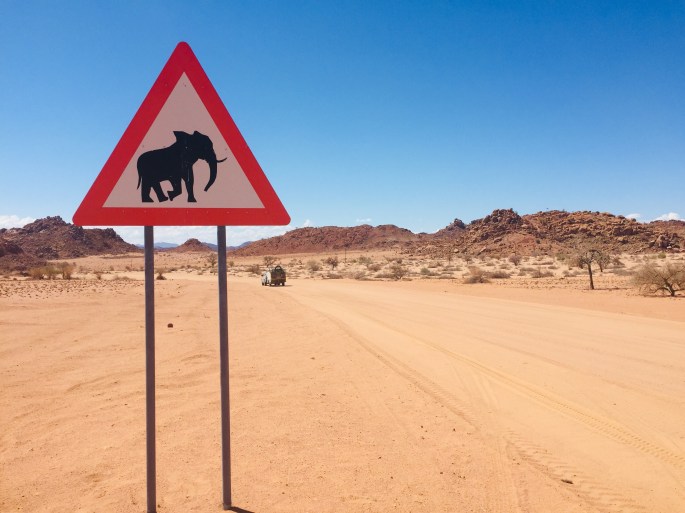
This part of Namibia is also the home of the desert elephant. We have not yet seen these elusive giants, but fingers crossed! ( I suggested calling them on an elliephone. Anton thought a trunk call would be better.)
Once again, the campsites did not disappoint.
Shaded sites with open air ablutions: perfect for stargazing!
Banana, honey and almond smoothie: a most pleasant find!
And on to Madisa Lodge campsite:
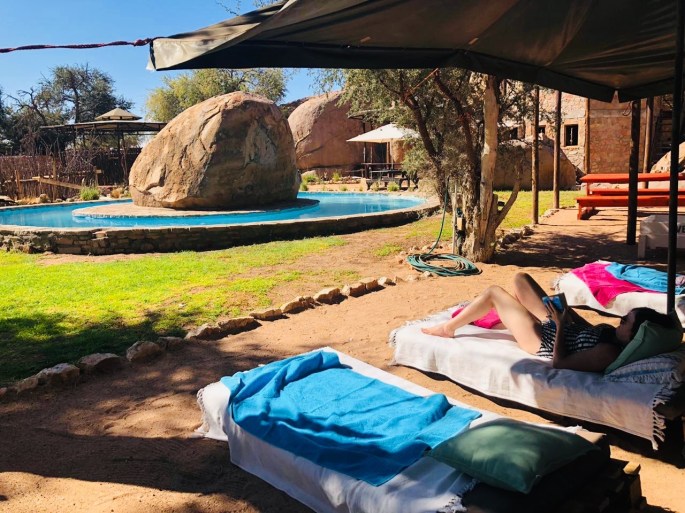
Loo with a viewAnother beautifully refreshing pool
Tonight we stay at the Palmwag lodge and then on to Sesfontein tomorrow.
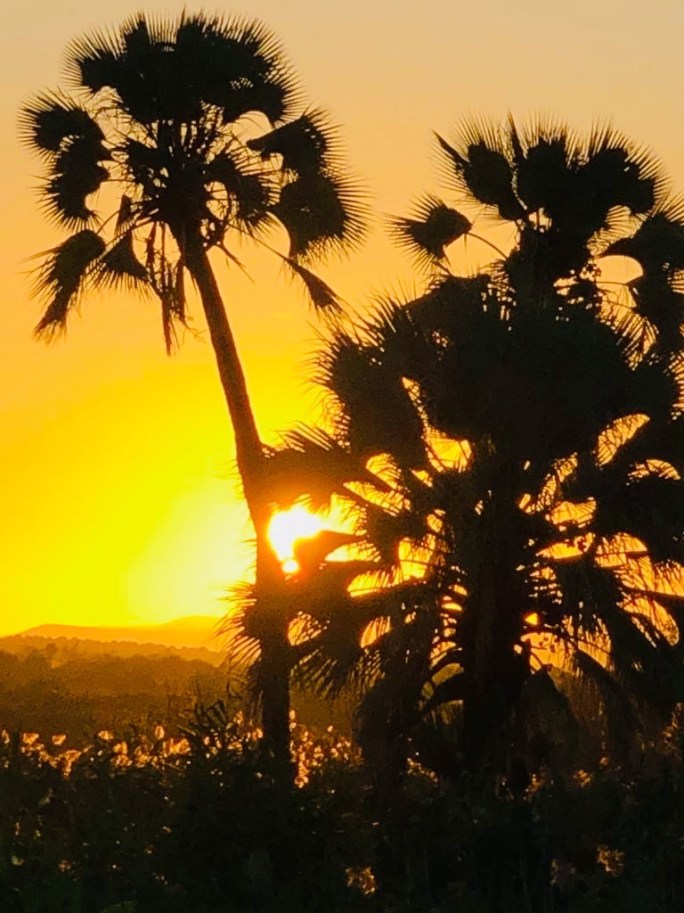
Sunset at Palmwag
Travel Info:
1.Sesriem to Swakopmund
Road: Very corrugated with a good chance of a puncture. We also passed an accident where foreigners lost control of their car.
Anticipated time: 6 hours
Actual time: 8 hours (including the puncture)
Stopover in Swakopmund: Alte Brucke
Convenience and facilities: 10/10
Ambience: 2/10
2.Swakopmund to Uis
Road: Beautiful dirt road. Smooth as silk.
Stopover: Dareb Isib campsite
Comfort and facilities: 9/10
Ambience: 7.5/10
Tour to see White Lady rock art:
• 50km NW of Uis
• Last tour leaves at 4pm
• N$ 80 pp
• Cash only – no credit card facilities
• Worthwhile
3.Uis to Madisa Lodge
Road: corrugated
Time: 2.5hours
Camping facilities:
Facilities and comfort: 8/10 (stunning pool!)
Ambience: 9/10
4.Madisa Lodge to Palmwag Lodge via Twyfelfontein
Time: 2.5 hours excluding tour at Twyfelfontein
Tour of petroglyphs at World Heritage Site in Twyfelfontein
• Cash only
• N$ 80 pp
• Highly recommended
Tip: Fill up with petrol as you enter the conservancy – there is no fuel available for quite a distance after that.
Stopover: Palmwag Lodge campsite
Camping facilities: 7/10
Ambience: 6/10
Rhino tracking and game drives available – at a price. (N$ 2300 and N$800, respectively.)
After the puncture episode in the searing heat, Swakopmund’s chilly temperature (14 degrees) was a welcome reprieve. It was mainly a reparations stop -for the car, the caravan and the constitution. All that shake, rattle – and thankfully not roll- took its toll on us all. We treated ourselves to a delicious meal at The Jetty restaurant, beautifully set at the end of the jetty, surrounded by the ocean on all sides.
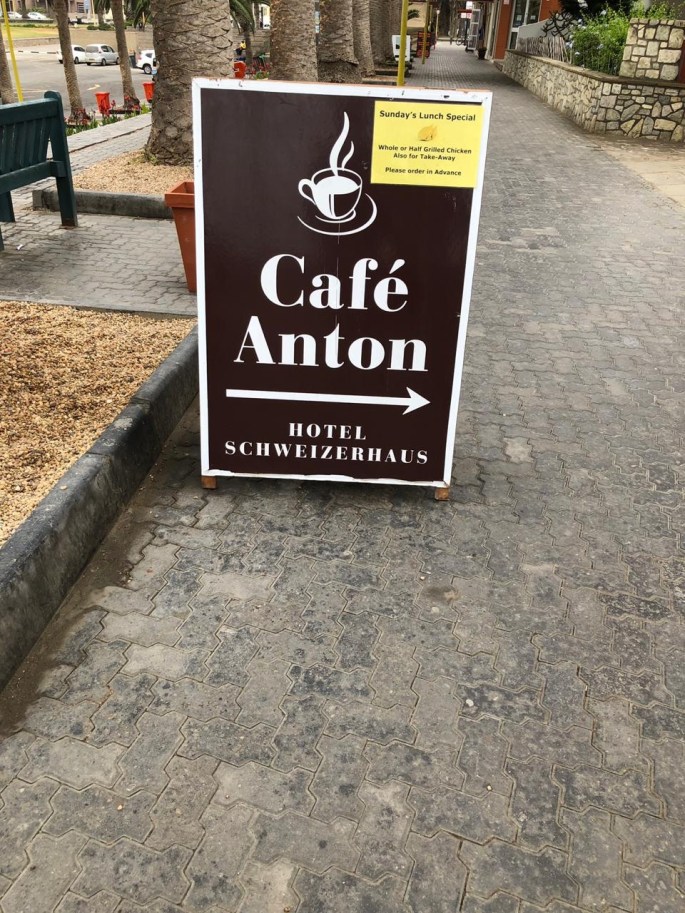
Of course we had to visit Cafe Anton for coffee and…
Apfelstrudel: desert dessert, it seems!
We left Swakop shivering in our boots and jackets. 5 hours later we were baking at 35+ degrees – a mere 20 odd degree difference in temperature.

























 Southern Safari 2