
If we’d been looking for a unique experience, this was it. Our efforts to come all the way back to Nhoma safari camp from Grootfontein were rewarded: the 12 km bush walk with Ju/‘Hoansi San trackers from Nhoma village was truly fascinating.
The trackers fetched us, all decked out in their loincloths for our benefit. (Yes, it wasn’t entirely authentic, but the hunting practices and use of medicinal plants are very much part of the day-to-day lives of these villagers.)
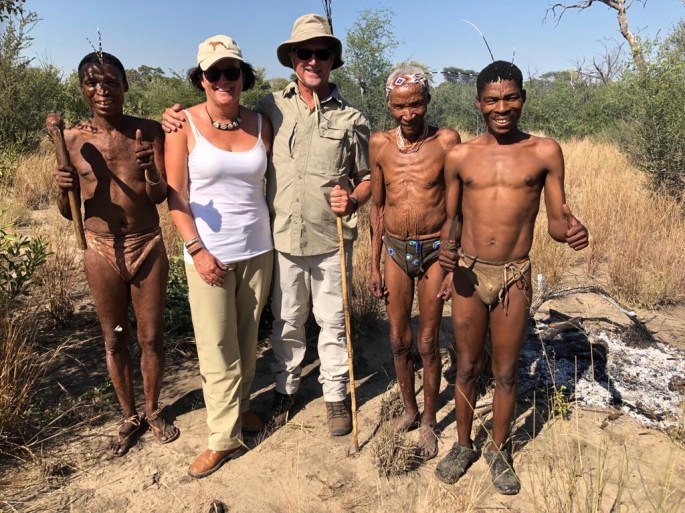
We set off at a relaxed pace, stopping to examine springbok, kudu and jackal spoor – and even fresh (one day old) leopard.


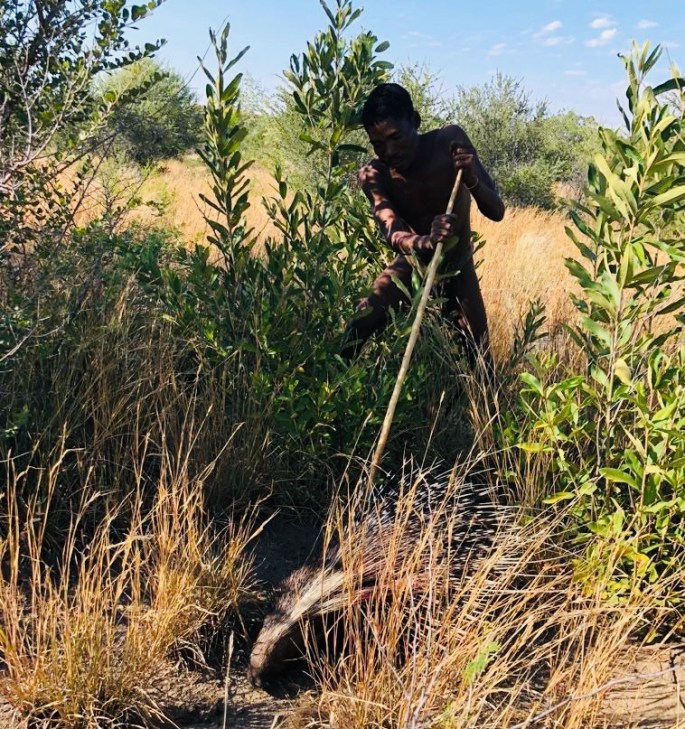
All at once the trackers came to a halt and conferred excitedly. They had found what they were looking for: porcupine spoor. The pace picked up as we wove this way and that through the brush, following the hapless creature. After about half an hour, we were motioned to stop. There, hiding in the shadows of a bush was the porcupine, quills aquiver. There was a flurry of movement as the porcupine broke cover, running the gauntlet to save its life. An assegai was raised, and I closed my eyes. In my mind I was saying, “Run, porcupine, run!” Although my eyes were closed, I could still hear the defensive rattling of quills and then rasping gasps as the porcupine took its last breaths. I have to admit, I was shaken. It was all a bit much for my dislocated Western sensibilities. I was used to pre-packed portions of meat that don’t resemble a living creature, for heaven’s sake
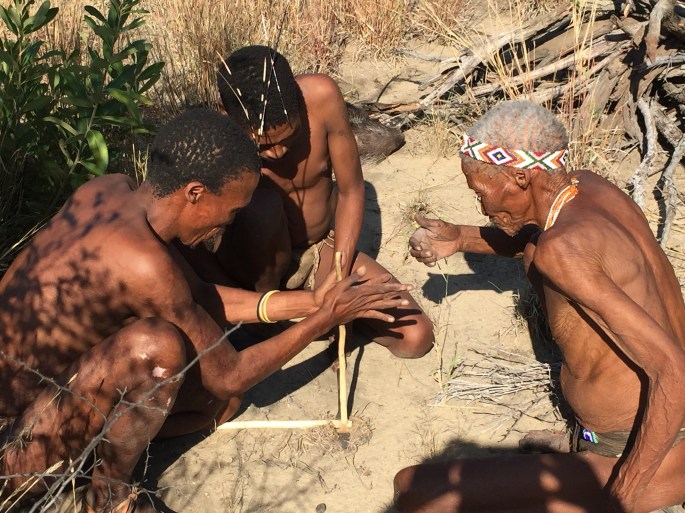
I watched in awe as an enormous pyre was built by rubbing two Mangetti sticks together.
The quills were harvested first. These are used to make jewellery. Then, the entire carcass was hurled onto the flames to burn away the hair.
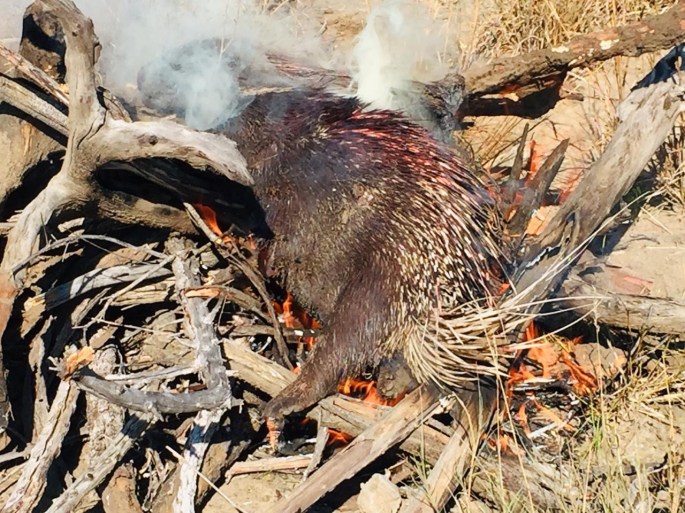
Once the skin and liver had been cooked and eaten, the meat was divided among the hunters. Apart from the intestines, every part of the animal is eaten – true nose to tail eating. Anton sampled some braaied porcupine skin. My stomach turned at the thought.
With full tummies and food for the pot, the hunters were ready to head back.
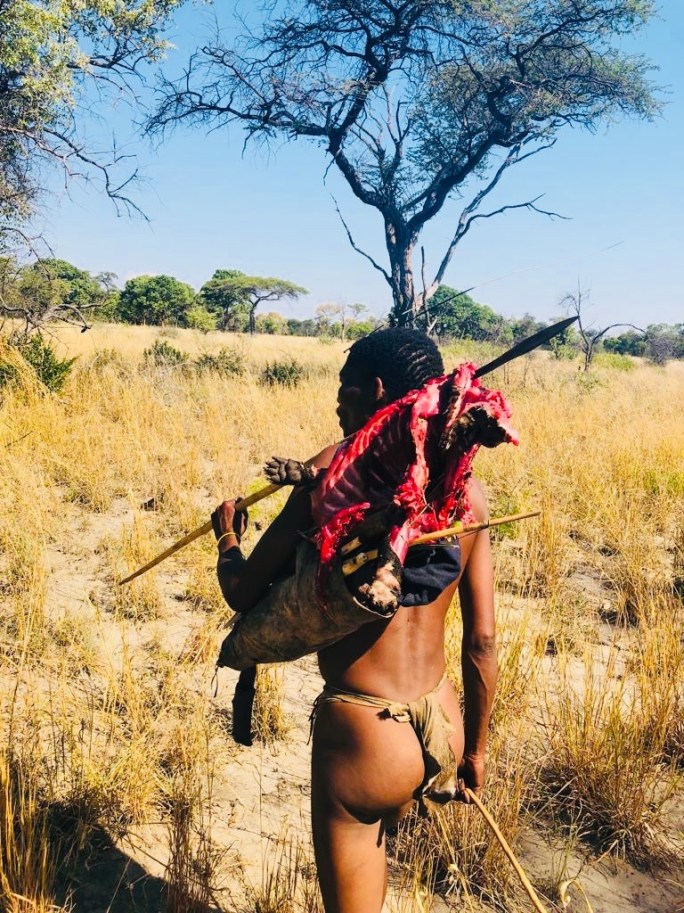
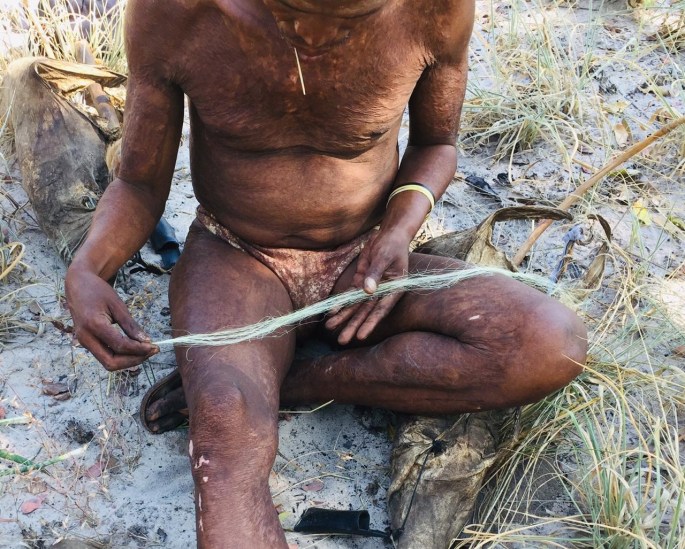
On our way back, they stopped to set a trap for guineafowl. To make the twine for the snare, fibres from the leaves of Mother-in law’s tongue were woven together:

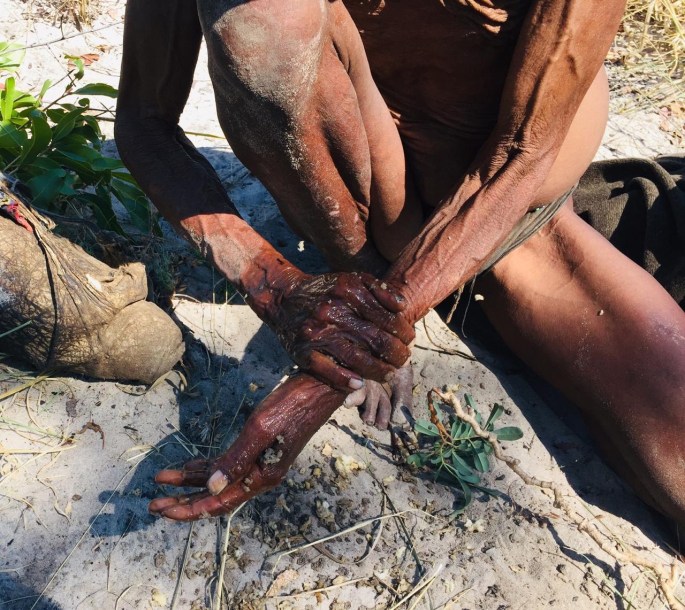
Violet tree roots are the bush equivalent of menthol or Vicks.
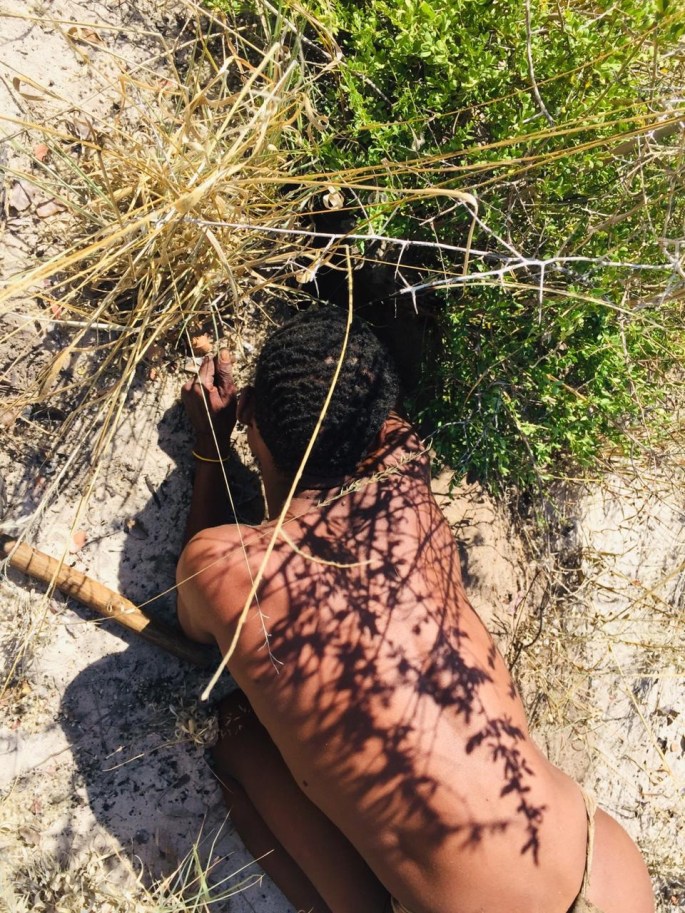
The liquid from the Kalahari ground tuber is used as a substitute for water:

We returned to our caravan. Anton took chops out of the freezer for supper, and I lit the gas stove for coffee. We wouldn’t survive long in the desert.
 Southern Safari 2
Oh my it sounds absolutely wonderful. I can imagine your stomach and the roasted porcupine! Did you see many birds? I have just potted some mother in law’s tongues. Must remember them when I want to tie someone up.
LikeLike